
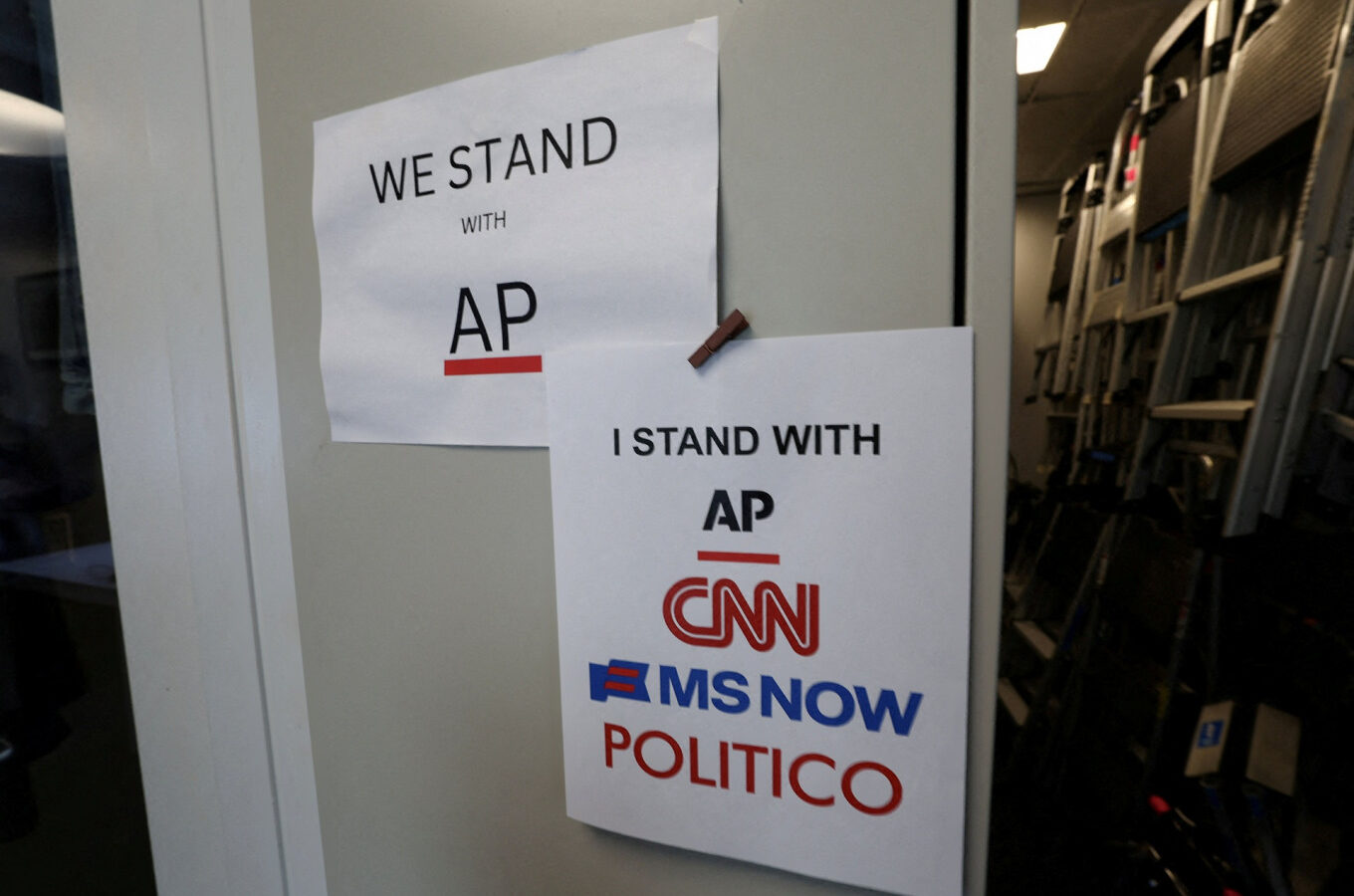
Major US television networks resumed pooled coverage of President Donald Trump’s White House events on Friday, ending a brief interruption in live television coverage as a legal dispute over access for CNN, MS NOW and Politico continues.
The resumption allowed television networks to provide live footage of Chinese President Xi Jinping’s arrival at the White House and his visit with Trump on the final day of Xi’s Washington trip. The two leaders also toured the National Archives, which houses key US founding documents.
The White House television press pool is operated on a rotating basis by major US networks, including CNN, ABC, CBS, Fox News and NBC, with the participating outlets sharing the costs and distributing footage to other media organisations.
The pool had effectively been suspended after the White House barred CNN, MS NOW and Politico from its grounds. The other television networks declined to establish cameras for presidential events while CNN was excluded, preventing the normal distribution of live pool footage during the first part of Xi’s visit.
Court Orders Restoration of Press Access
The dispute began after the Trump administration barred the three media organisations from the White House.
CNN, MS NOW and Politico subsequently challenged the decision in federal court, arguing that the restrictions violated constitutional protections for freedom of speech and the press, as well as due-process rights.
US District Judge Timothy Kelly issued a temporary restraining order requiring the administration to restore the journalists’ White House credentials for 14 days while the legal challenge proceeds.
The judge said the outlets had met the legal threshold for temporary relief and found that they were likely to succeed in demonstrating that their credentials had been revoked without the required due process.
The White House subsequently restored access, although reporters from the affected organisations initially encountered difficulties re-entering the complex after the court order.
The underlying lawsuit has not yet been finally resolved, meaning the broader dispute over the administration’s restrictions remains before the courts.
CNN Reports Further Restriction
Despite the restoration of White House credentials, CNN said Friday that it had been excluded from travelling with Trump aboard Air Force One for his weekend trip to Tennessee.
The development indicates that the court-ordered restoration of access has not ended all disagreements between the administration and the affected news organisations.
Trump has repeatedly criticised news organisations whose coverage he considers inaccurate or unfair. His administration has also sought to change aspects of how journalists gain access to restricted areas of the White House.
The administration has argued that it has legitimate reasons for imposing restrictions, including concerns over reporting that it considers false or involving sensitive information. The affected media organisations dispute those arguments and contend that access restrictions based on the content of their journalism violate constitutional protections.
Why the Television Pool Matters
The dispute has also highlighted the importance of the White House press pool.
Because only a limited number of journalists and cameras can accompany the president during certain events, pool arrangements allow several news organisations to share coverage.
When the participating networks suspended their pool operation, the result was not simply that individual reporters lost access. It also meant that other media organisations and the public temporarily lacked the usual live television feed of presidential events.
The resumption of the pool therefore restores an important mechanism through which presidential events are visually documented and distributed across the wider US news industry.
For international observers, the dispute also illustrates the tension that can arise between executive control over access to government facilities and the role of independent media in covering public officials.
The legal battle is continuing, with the affected outlets expected to seek continued protection of their access as the case proceeds.